

-
AboutThe products involve multiple fields such as plastics, composite materials, and functional materials, and are applied in areas such as rail transit, special equipment, new energy vehicles, and machinery manufacturing.

-
ProductsThe products involve multiple fields such as plastics, composite materials, and functional materials, and are applied in areas such as rail transit, special equipment, new energy vehicles, and machinery manufacturing.
-
BlogThe products involve multiple fields such as plastics, composite materials, and functional materials, and are applied in areas such as rail transit, special equipment, new energy vehicles, and machinery manufacturing.
MC Nylon (Cast Nylon): The Optimal Engineering Plastic for Metal Replacement — Achieving Lightweight Design and Cost Savings in Automotive and Machinery Industries
2025-11-28

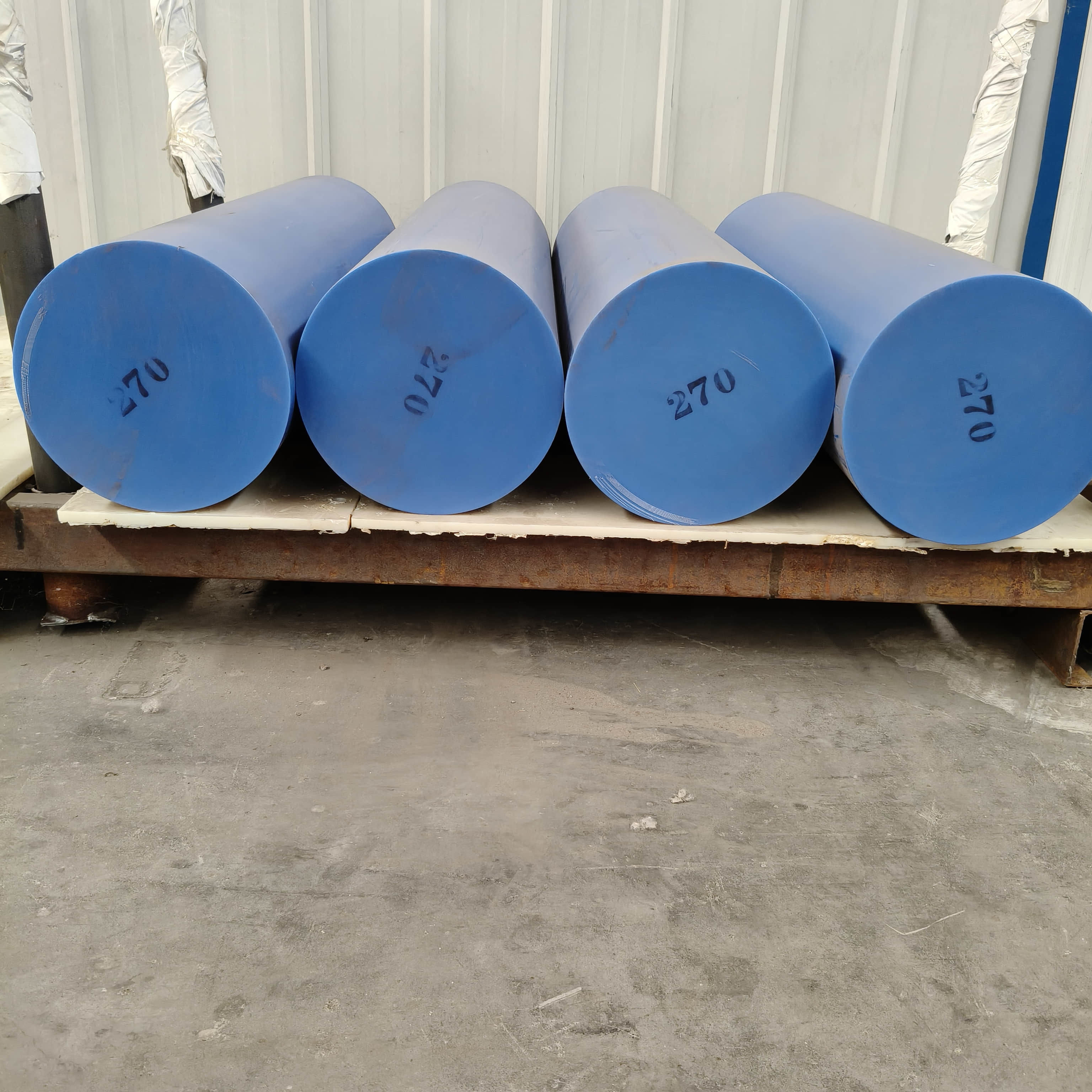
In 2025, automotive and machinery companies worldwide face unprecedented pressure: stricter CAFE/Euro 7/China 7 emission standards, soaring raw material prices, and the urgent demand for longer EV range. The most proven and widely adopted solution is “replacing metal with plastic,” with high-performance engineering plastics substituting steel, aluminum, and bronze components. Among all options, MC Nylon (Monomer Casting Nylon, also known as Cast Nylon) has become the preferred material for metal replacement due to its ultra-high molecular weight (70,000–110,000), outstanding wear resistance, inherent self-lubrication, and superior cost-performance ratio.
Fact-based benefits: Every 100 kg reduction in vehicle weight lowers fuel consumption by 0.3–0.5 L/100 km or increases EV range by 5–8%. With a density of only 1.15 g/cm³ — approximately 1/7 of steel and 1/8 of copper — MC Nylon delivers dramatic lightweight advantages while maintaining or exceeding the service life of metal parts in most applications.
1. The Irresistible Global Trend: Nylon Parts Are Rapidly Replacing Metal
- Plastics now account for 18–22% of total vehicle mass; engineering plastics (led by nylon) represent over 40% of that share.
- According to DSM, BASF, and Lanxess 2024–2025 forecasts, nylon consumption per new energy vehicle will reach 25–35 kg — nearly double that of traditional ICE vehicles.
- In heavy machinery, port equipment, mining, and machine tools, bronze and cast iron bushings, sliders, and sheaves are being systematically replaced by MC Nylon and its modified variants.
Tesla, Volkswagen, BYD, Caterpillar, and numerous Tier-1 suppliers have officially listed MC Nylon as a strategic lightweight material.
2. What Exactly Is MC Nylon and Why Does It Outperform Both Ordinary Nylon and Metals?
MC Nylon is produced by anionic polymerization of caprolactam under atmospheric pressure, followed by direct casting into the final or near-net shape mold. This process yields a molecular weight 3–5 times higher than conventional extruded or injection-molded Nylon 6/66.
MC Nylon vs. Ordinary Nylon 6/66
| Property | MC Nylon | Nylon 6/66 | Key Advantage |
|---|---|---|---|
| Molecular Weight | 70,000–110,000 | 20,000–40,000 | 3–5× higher mechanical strength & wear life |
| Crystallinity | ≥50% | 30–40% | Superior dimensional stability & low stress |
| Max Single-Part Weight | Unlimited (tons) | Limited (~10 kg) | Ideal for large bushings and sheaves |
| Processing | Direct casting | Injection/extrusion | Lower tooling cost for medium/small batches |
Six Core Advantages That Enable Reliable Metal Replacement
- Extreme lightweight (density 1.15 g/cm³)
- Outstanding dry-running wear resistance & self-lubrication (friction coefficient 0.08–0.18)
- Excellent vibration damping and noise reduction (10–20 dB quieter than metal)
- High toughness and impact resistance even at −40 °C
- Superior chemical and corrosion resistance
- Dramatically lower total cost of ownership (material + processing + maintenance)
3. Real-World Automotive Lightweight Success Stories (2023–2025)
| Application | Original Material → MC Nylon Solution | Results |
|---|---|---|
| Concrete mixer truck planetary gear | Cast steel + bronze → Modified MC Nylon gear | Noise −15 dB, weight −68%, life >10 years |
| Truck-mounted crane boom slider | Phosphor bronze → Oil-containing MC Nylon slider | Life ×4–5, maintenance interval ×8 |
| BEV battery tray & cooling system brackets | Aluminum alloy → 30% GF-reinforced MC Nylon | Single-vehicle weight saving 20–45 kg, cost −30–40% |
| Water pump impeller & fan blades | Aluminum/PA66 → High-temperature MC Nylon variant | Weight −55%, cavitation resistance improved |
Average outcome across OEMs and Tier-1s: 25–60 kg weight reduction per vehicle, 4–8% lower energy consumption, and 35–50% lower lifecycle cost reduction.
4. Heavy Machinery & Industrial Applications — Where Cost Savings Are Most Dramatic
In ports, steel mills, mining, and large presses, a single large MC Nylon part (300–500 kg) routinely replaces 2–3 tons of bronze or cast iron.
Representative cases 2024–2025:
- Port crane rope pulley (Ø1.5–3 m): cast steel → MC Nylon + internal lubrication → rope life ×8–10, pulley weight −80%
- 10,000-ton hydraulic press bearing: bronze → oil-containing MC Nylon → annual bronze savings worth millions of RMB/USD
- Excavator arm & bucket bushings: phosphor bronze → MoS₂-filled MC Nylon → service life from 1,000 h → 5,000+ h
Total cost of ownership typically drops 50–70% compared with bronze solutions.
5. Direct Head-to-Head Comparison: MC Nylon vs. Traditional Metals
| Property | MC Nylon | Steel / Bronze / Aluminum | Winner & Reason |
|---|---|---|---|
| Density | 1.15 g/cm³ | 7.2–8.9 g/cm³ | MC Nylon – massive weight saving |
| Wear life (dry/unlubricated) | 4–10× bronze | Baseline | MC Nylon |
| Noise & vibration | Excellent damping | High | MC Nylon |
| Corrosion resistance | Excellent | Poor–moderate | MC Nylon |
| Processing & tooling cost | Low (casting) | High (CNC machining) | MC Nylon |
| Total lifecycle cost | 30–70% lower | Baseline | MC Nylon |
Decision rule for engineers and purchasers in 2025: If your part experiences sliding wear, needs noise reduction, lightweight design, or infrequent lubrication — MC Nylon (or its filled variants) is almost always the superior technical and commercial choice.
6. Outlook 2025–2030
New modified grades — carbon-fiber reinforced, nano-filled, high-thermal-conductivity, and flame-retardant MC Nylon — are already in mass production. Applications will expand from traditional bushings and gears into electric drive housings, robot joint components, and wind-turbine pitch bearings.
Conclusion
MC Nylon has evolved from a niche engineering plastic into the go-to material whenever reliable, cost-effective metal replacement is required. It delivers proven lightweight performance, dramatically longer service life, and substantial total cost reduction for both automotive and heavy machinery manufacturers.
Ready to replace metal with MC Nylon in your next project? Contact us today for free material samples, design assistance, and rapid prototyping of custom cast nylon parts. Let us help you achieve lighter, quieter, and more profitable products in 2025 and beyond.
TAG:
Related News

The Ultimate Guide to MC Nylon Sheets: Specifications, Performance, and Purchasing Advice
Get a Quote
We will contact you within one working day. Please pay attention to your email.
Contact Us
Phone: +86-15100970246
WhatsApp: +86-19030134179
E-mail: 15100970246@163.com
Address: Mid-section of Guanghua Road, Renze Economic Development Zone, Hebei, China